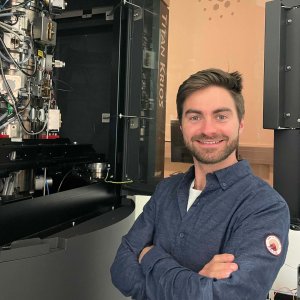
This iDoc project aims to develop cryo-electron tomography (cryoET) as diagnostic tool for direct analysis of IBCs in exfoliated uroepithelial cells from patients with acute UTIs. CryoET enables macromolecular insights into infected patient cells, allowing the dissection of IBC ultrastructure at unprecedented resolution. We will establish workflows for processing exfoliated uroepithelial cells from patient urine for subsequent cryoET imaging. This will help to discover new virulence factors involved in IBC formation by an integrative analysis of cryoET data with complementary techniques. The established workflow will be subsequently used to compare IBCs in individual patients.
Urinary tract infections (UTIs) are among the most common bacterial infections in humans. Besides being generally considered to be extracellular infections, they are often incompletely resolved. About 25% of patients experience a recurrent UTI and the resulting repetitive administration of antibiotics contributed to higher antibiotic resistance rates in uropathogens. Up to 90% of UTIs are caused by uropathogenic E. coli (UPEC), which can proliferate in the bladder lumen but are also capable of invading uroepithelial cells where they form intracellular bacterial communities (IBCs). These IBCs exhibit biofilm-like properties, protecting the pathogen from host defenses and antibiotics, and IBCs are a potential cause for the development of recurrent UTIs. A fundamental understanding of the underlying cellular processes during IBC formation is still missing, hence preventing the development of targeted and personalized treatment strategies.