
Success Story
PhD Students and Postdoctoral Researchers
EDU Projects
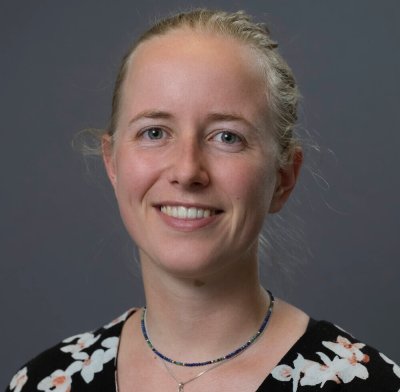
Ellen Aarts
My project aims to better understand how genetic mutations lead to specific clinical outcomes in ciliopathies, a group of rare monogenic disorders with highly variable symptoms. Using computational methods, I seek to unravel these complex genotype-to-phenotype relationships.
As a PhD student in systems biology, supervised by Pedro Beltrao and Ruxandra Bachmann-Gagescu, I apply network-based approaches to identify patterns in how protein interactions relate to organ-specific disease manifestations. In a preprint, I demonstrated how integrating sparse data can help predict both candidate disease genes and their likely organ involvement in ciliopathies.
Working with supervisors from two distinct scientific backgrounds has helped me to develop as an interdisciplinary researcher. Following the PHRT funding, I will continue working on the project with a focus on defining the tissue-specific ciliary interactome and further explore the translational potential of this project.
PhD student in SystemsBiology at ETH Zurich / University of Zurich
Article:
PI: Pedro Beltrao, ETH Zurich
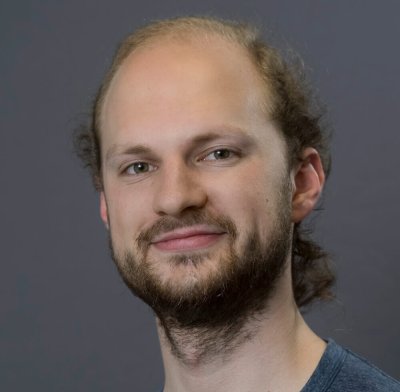
Lorenzo Davide Dodi
The aim of my research project is to contribute to the mission of personalized medicine in the context of ADHD. Our goal is to enable data-driven phenotypic screening. This type of tailored and personalized interventions may improve treatment outcomes for individuals with ADHD, reduce personal and societal burden, and contribute to the discovery of novel treatments.
My role in the project is to connect our clinical partners with my lab’s electrophysiological phenotyping expertise. Our goal is to combine these resources and provide innovative insights into potential quantitative biomarkers for diagnostics and treatment outcome predictions.
This project is a fundamental step in my scientific career. It brings together the topics and techniques that I became passionate about in previous positions, adding the essential aspects of translational research. The project provides a lot of independence and freedom to explore new and interesting perspectives. I am confident that I will continue to pursue translational research. The potential to directly impact patients is a major driving factor in my decision.
PhD Student in Biosystem Science and Engineering Department, ETH Zurich
Article:
PI: Andreas Hierlemann, ETH Zurich
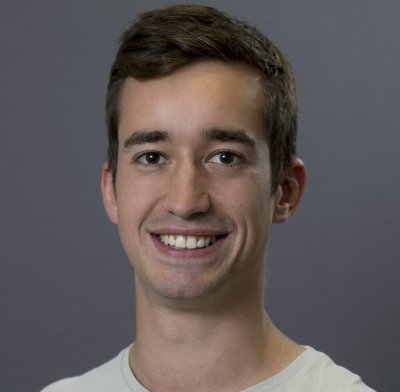
Benjamin Hunkeler
Targeted radionuclide therapy is a promising therapy concept for end-stage cancer. So far, targeted radiopharmaceuticals have only been approved for the treatment of metastasized neuroendocrine and prostate cancers. In gynecological malignancies, the folate receptor-alpha (FRα) has been proposed as a potential target. In my project I am characterizing FRα expression in various ovarian cancer subtypes and physiological tissues. This part of the project is being conducted at the University Hospital Zurich under the guidance of Niels Rupp. At the Paul Scherrer Institute, I am engaged in the design and pre-clinical characterization of novel folate radioconjugates.
This collaborative project has allowed me to gain experience in both radiopharmaceutical sciences and clinical pathology. Drawing on my knowledge in cancer immunotherapy acquired during my master’s degree and subsequent work as a research associate in a startup company, I have developed a broad scientific background in cancer diagnostics and therapeutic strategies. After completing my PhD studies, I hope to continue my career in the field of cancer therapy, ideally at the interface between pre-clinical and clinical research.
PhD Student in Radiopharmaceutical Sciences at Paul Scherrer Institute, Villigen
Article:
PI: Cristina Müller, PSI
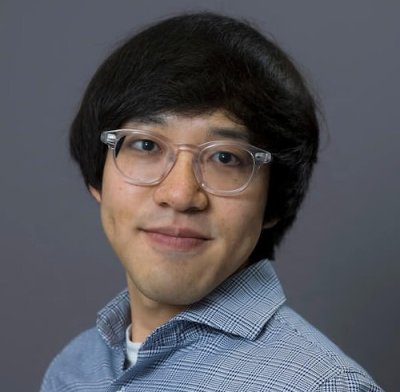
Sudong Lee
The key aim of my research is to demonstrate the feasibility of a “personalizable” shoulder rehabilitation wearable device. I have completed a study on the replication of the glenohumeral joint, which closely resembles the structure of the human shoulder. My goal is to develop a physical twin of the shoulder. Additionally, I am building a platform for easy acquisition of shoulder motion data, which I will integrate into simulation software to validate the shoulder simulation model.
This research has marked a significant milestone in my scientific career by providing an opportunity to deeply engage with fundamental and critical challenges related to the optimization and personalization of wearable robotic systems. I have not only advanced my expertise but also broadened my understanding of the complex considerations involved in designing robotics technologies tailored to individual users.
I believe that this PHRT-funded research contributes to the advancement of robotics technology and fosters communication and integrated development across various academic fields. On a personal level, participating in this major research project taught me how to plan, manage, and execute complex projects effectively.
PhD student at EPFL in Lausanne
Article:
PI: Josie Hughes, EPFL
Leopold Franz
The goal of our project is to personalize fertility treatments by optimizing hormone stimulation protocols based on each patient’s unique hormone dynamics and 3D ovarian ultrasound images provided by our clinical partners. To achieve this, we are developing an advanced image analysis tool to quantify ovarian follicle dynamics, alongside a mathematical model grounded in well-established regulatory interactions between key reproductive hormones and follicular growth. The model is calibrated to individual hormone profiles and follicle growth dynamics. Deviations between model predictions and patient data help uncover missing regulatory interactions or signs of hormonal dysregulation.
In this project I have developed 3D image analysis tools to measure and track ovarian follicles and have integrated the tools into clinical use for an upcoming study. The modelling is conducted as part of another PHRT-funded project.
This project is the core of my PhD. Being involved in both research and clinical integration has provided invaluable insights into medical translation.
PhD student in the Department of Biosystems and Engineering and Engineering at ETH Zurich
Article:
PI: Dagmar Iber, ETH Zurich
Margaux Schmeltz
My project aimed to characterize the biomechanics of healthy and reconstructed human middle ears through 3D visualization of ossicular motion and by describing the nanoscale structure of auditory ossicles using advanced X-ray imaging and scattering techniques. We also investigated the impact of middle ear pathologies and assessed the durability of surgical procedures like ossicle reshaping or prosthesis attachment. The goal was to provide clinical guidance to improve the success rate of surgeries restoring hearing function.
As principal investigator, I coordinated a multidisciplinary team and led all phases of the project. We showed that ossicles affected by certain pathologies like cholesteatoma may be unsuitable for autologous grafts, and that using the patient’s own ossicle as graft material over a synthetic prosthesis is not always the best option. Our findings demonstrated how basic research can have a direct impact in the operating room to support surgeons in their decision-making. The project significantly shaped my scientific trajectory, strengthening my expertise in advanced correlative imaging and translational research, while also expanding my professional network across disciplines. Following PHRT funding, I transitioned to applied research in industry, where I aim to continue developing innovative imaging strategies and translate them into impactful solutions.
Postdoc student until March 2025 at the Paul Scherrer Institute, Villigen
Article:
PI: Margaux Schmeltz, PSI